Get a Quote
Send your contact information and we will get back to you as soon as possible.
Send your contact information and we will get back to you as soon as possible.



The construction industry is largely built on durability, speed, and application safety. One of the unseen yet critical components of this process is construction wire. Used in a wide range of applications from reinforced concrete structures to temporary site solutions construction wires provide practicality on-site, reduce labor time, and help maintain structural order.
In this article, we comprehensively and technically address the following questions: What is construction wire, for what purposes is it used on construction sites, and what do different usage terms such as annealed wire, binding wire, and construction wire mean?
Construction wire is a general term for wire products—typically made of low-carbon steel—used on construction sites for tying, fixing, supporting, and temporary applications. Its most important characteristics are flexibility, ease of shaping, and high binding performance.
Construction wires are commonly referred to as:
Although these terms may be used for different purposes on-site, they often refer to the same product group.
Annealed wire is produced by subjecting low-carbon steel wire to a specific heat treatment process (annealing). This process softens the internal structure of the wire and provides elasticity.
Due to these advantages, annealed wire is the most commonly used type of construction wire on construction sites.
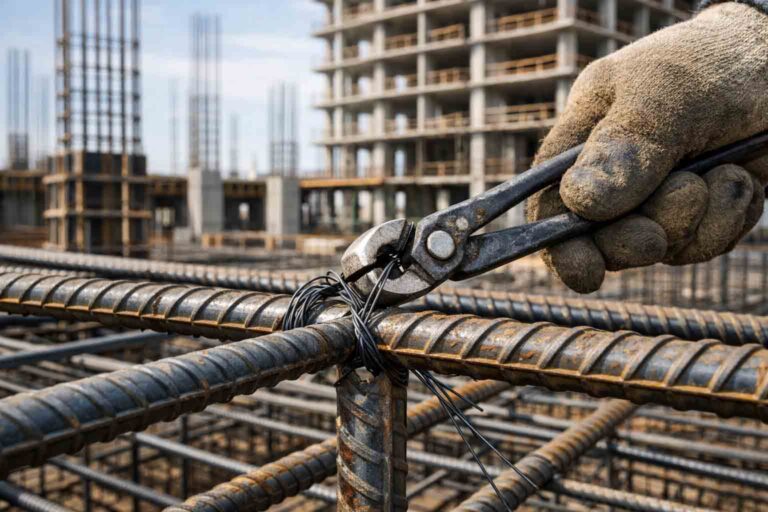
Binding wire is a type of construction wire—generally made from annealed wire—used primarily for rebar tying operations. On-site, the term “binding wire” is defined by its function rather than its material.
Binding wire prevents reinforcements from shifting before concrete pouring, ensuring compliance with structural design requirements.
Construction wires are actively used across many areas of a construction site, not only in reinforced concrete works.
1. Rebar Tying and Fixing
The most common application. It ensures that column, beam, and slab reinforcements are fixed according to project specifications.
2. Support Use in Formwork Systems
In wooden or metal formwork systems, construction wire is used for:
3. Site Organization and Temporary Solutions
4. Welded Wire Mesh Applications
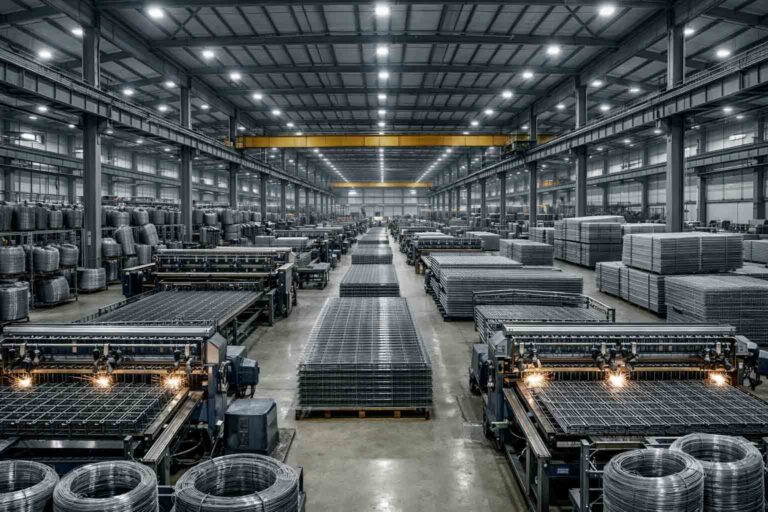
Binding wire is widely used for connection and alignment during welded wire mesh installation.
5. Prefabricated and Industrial Structures
It facilitates installation by temporarily fixing prefabricated structural components.
Construction wires used on-site are generally classified according to the following criteria:
By Wire Diameter
By Surface Type
By Packaging Form
This is a frequently asked question on construction sites.
Annealed wire:
Galvanized wire:
Therefore, annealed wire is the standard choice for binding wire in reinforced concrete applications.
Choosing the right construction wire directly affects both workmanship quality and application speed.
Key criteria include:
Low-cost but low-quality construction wires can cause breakage, tying difficulties, and labor inefficiencies.
These mistakes result in time loss and increased labor costs.
In summary, construction wire is not merely a simple tying material on construction sites; it is a critical auxiliary component in terms of occupational safety, application accuracy, and speed. While terms such as annealed wire, binding wire, and construction wire represent different usage purposes, selecting the right product always directly impacts project quality.
As MG Demir & Çelik, we offer tailored solutions for construction sites and projects with our annealed wire, binding wire, construction wire, and galvanized wire product groups. You can contact us to select the most suitable product based on quantity, wire diameter, and application requirements.
Subscribe to our newsletter to be informed about our company and products.