Get a Quote
Send your contact information and we will get back to you as soon as possible.
Send your contact information and we will get back to you as soon as possible.


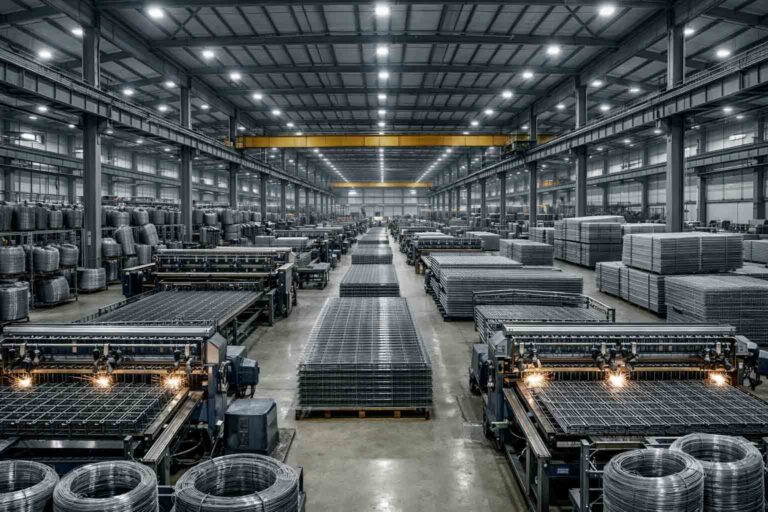
What Is Binding Wire is a common question asked by construction workers, site supervisors, and procurement professionals. Binding wire is a flexible and durable wire product primarily used to tie and secure steel reinforcement bars (rebar) in reinforced concrete structures. Thanks to its annealed structure, it can be easily bent and applied without breaking, improving work efficiency on construction sites.
Binding wire is a type of low-carbon steel wire that is softened through an annealing process. This heat treatment reduces hardness and increases flexibility, making the wire easy to twist and shape during application. As a result, it is widely used for tying, fixing, and temporary fastening tasks in construction projects.
In the construction industry, binding wire is also commonly referred to as annealed wire, rebar tying wire, or construction wire. It is available in various diameters—such as 0.90 mm, 1.25 mm, and 1.50 mm—and can be supplied in different packaging forms including coils, bundles, or big bags, depending on project requirements.
Binding wire plays a critical role in reinforced concrete structures by ensuring that steel reinforcements remain in their correct positions during concrete pouring. Proper fixation of rebar is essential for maintaining structural integrity and meeting engineering specifications.
High-quality binding wire provides:
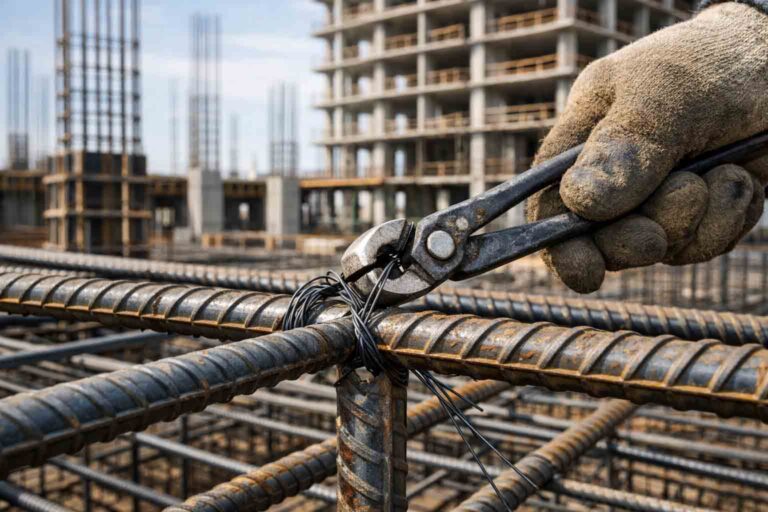
The most common use of binding wire is tying reinforcement bars in columns, beams, foundations, and slabs. It ensures that rebar remains stable and properly aligned according to the project design.
Binding wire is used to secure reinforcement bars within formwork, helping maintain correct spacing and concrete cover thickness—both critical for structural durability.
On construction sites, binding wire is frequently used for temporary fastening of pipes, formwork components, steel elements, or provisional structures due to its practicality and ease of use.
In prefabricated construction systems, binding wire is often used for temporary connections and positioning during assembly and installation processes.
Binding wire is also used in site fencing, temporary barriers, wire mesh installation, and other auxiliary construction and landscaping applications.
Selecting the correct binding wire diameter depends on the size of the reinforcement bars and the application type:
Choosing the appropriate diameter improves binding strength and prevents unnecessary material waste.
These advantages make binding wire an essential auxiliary material in the construction industry.
What Is Binding Wire can best be answered as a fundamental construction material that ensures reinforced concrete structures are built safely, accurately, and efficiently. Using the correct type and diameter of binding wire directly contributes to improved workmanship, reduced errors, and enhanced structural safety. For reliable and sustainable construction practices, binding wire selection should always be based on technical requirements and project needs.
Subscribe to our newsletter to be informed about our company and products.